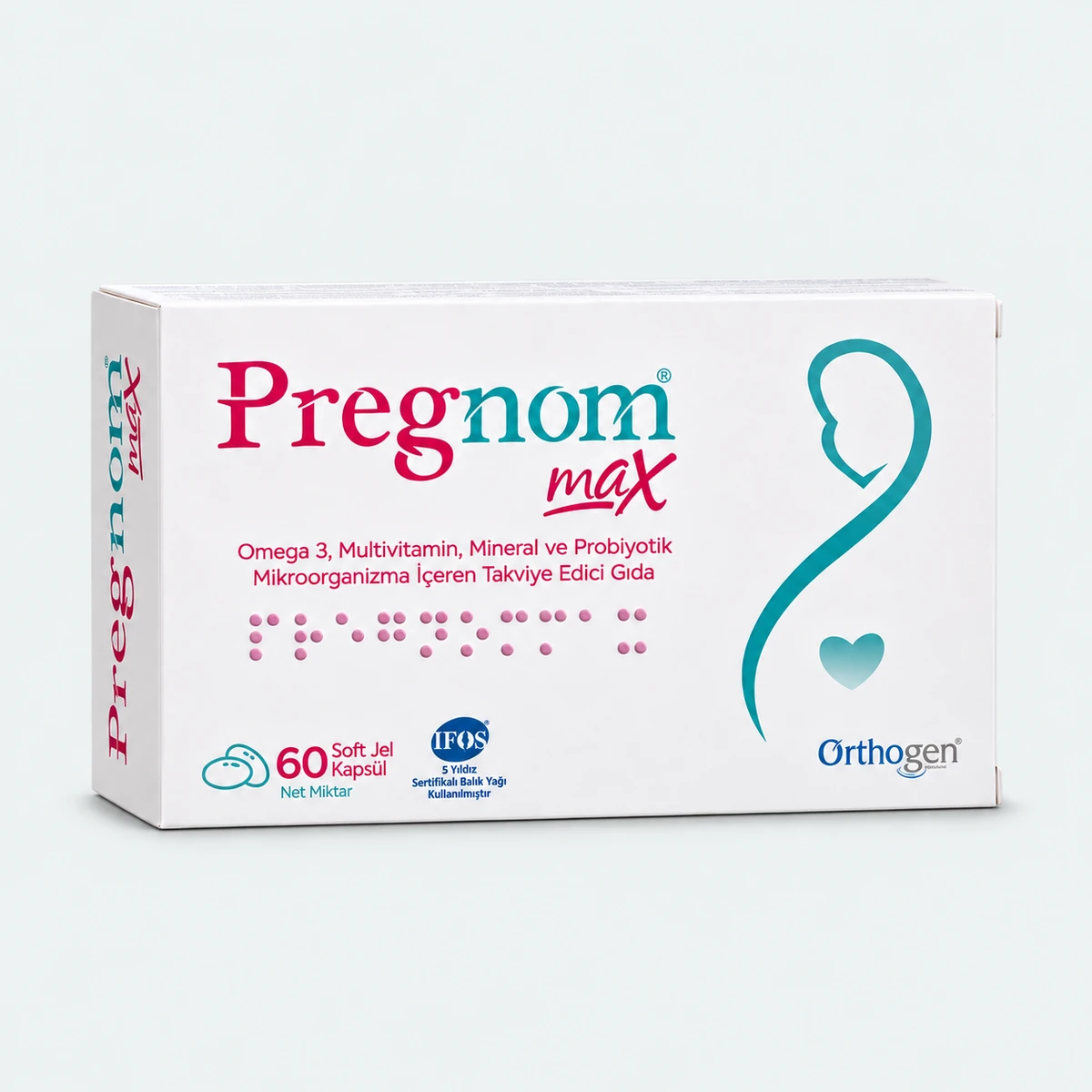
Pregnom Max 60 Soft-Jel
Hamilelik ve emzirme dönemine özel Omega-3, probiyotik ve multivitamin formülü.
- Form
- Softgel capsule
- Pack
- 60 Capsule
01Composition
Serving
1 Softgel capsule
| Ingredient | Amount per softgel | BRD* |
|---|---|---|
| Fish oil | 400 mg | ** |
| Omega-3 | 250 mg | ** |
| DHA | 200 mg | ** |
| EPA | 40 mg | ** |
| Vitamin C | 40 mg | %50 |
| Iron | 17 mg | %121,42 |
| Vitamin B3 | 16 mg | %100 |
| Vitamin E | 12 mg | %100 |
| Zinc | 10 mg | %100 |
| Vitamin B6 | 6 mg | %100 |
| Vitamin B2 | 1,4 mg | %100 |
| Vitamin B6 | 1,4 mg | %100 |
| Vitamin B1 | 1,2 mg | %109 |
| Copper | 1200 mcg | %120 |
| Manganese | 1 mg | %50 |
| Folic acid | 400 mcg | %200 |
| Iodine | 150 mcg | %100 |
| Selenium | 55 mcg | %100 |
| Biotin | 55 mcg | %100 |
| Vitamin D | 15 mcg | %300 |
| Vitamin B12 | 2,5 mcg | %100 |
| Lactobacillus Rhamnosus | 1 milyar | ** |
* NRV: Nutrient Reference Value · ** No reference value has been set.
02Directions
One softgel a day.
Do not exceed the recommended daily portion.
03Health claim
Vitamin C
- Vitamin C contributes to the normal function of the immune system.
- Vitamin C contributes to the reduction of tiredness and fatigue.
- Vitamin C contributes to normal energy-yielding metabolism.
- Vitamin C contributes to normal functioning of the nervous system.
- Vitamin C contributes to the protection of cells from oxidative stress.
- Vitamin C contributes to the regeneration of the reduced form of vitamin E.
- Vitamin C contributes to normal collagen formation for the normal function of blood vessels.
- Vitamin C contributes to normal collagen formation for the normal function of bones.
- Vitamin C contributes to normal collagen formation for the normal function of cartilage.
- Vitamin C contributes to normal collagen formation for the normal function of gums.
- Vitamin C contributes to normal collagen formation for the normal function of skin.
- Vitamin C contributes to normal collagen formation for the normal function of teeth.
Iron
- Iron contributes to normal energy-yielding metabolism.
- Iron contributes to normal formation of red blood cells and haemoglobin.
- Iron contributes to normal oxygen transport in the body.
- Iron contributes to the normal function of the immune system.
- Iron contributes to the reduction of tiredness and fatigue.
Niacin (vitamin B3)
- Niacin contributes to normal energy-yielding metabolism.
- Niacin contributes to normal functioning of the nervous system.
- Niacin contributes to the maintenance of normal mucous membranes.
- Niacin contributes to the maintenance of normal skin.
- Niacin contributes to the reduction of tiredness and fatigue.
Vitamin E
- Vitamin E contributes to the protection of cells from oxidative stress.
Zinc
- Zinc contributes to the normal function of the immune system.
- Zinc contributes to the protection of cells from oxidative stress.
- Zinc contributes to normal DNA synthesis.
- Zinc contributes to normal acid-base metabolism.
- Zinc contributes to normal carbohydrate metabolism.
- Zinc contributes to normal macronutrient metabolism.
- Zinc contributes to normal metabolism of fatty acids.
- Zinc contributes to normal metabolism of vitamin A.
- Zinc contributes to normal protein synthesis.
- Zinc contributes to the maintenance of normal bones.
- Zinc contributes to the maintenance of normal hair.
- Zinc contributes to the maintenance of normal nails.
- Zinc contributes to the maintenance of normal skin.
- Zinc contributes to the maintenance of normal vision.
Vitamin B6
- Vitamin B6 contributes to normal energy-yielding metabolism.
- Vitamin B6 contributes to normal functioning of the nervous system.
- Vitamin B6 contributes to normal homocysteine metabolism.
- Vitamin B6 contributes to normal protein and glycogen metabolism.
- Vitamin B6 contributes to normal red blood cell formation.
- Vitamin B6 contributes to the normal function of the immune system.
- Vitamin B6 contributes to the reduction of tiredness and fatigue.
- Vitamin B6 contributes to the regulation of hormonal activity.
- Vitamin B6 contributes to normal cysteine synthesis.
Riboflavin (vitamin B2)
- Riboflavin (vitamin B2) contributes to normal energy-yielding metabolism.
- Riboflavin (vitamin B2) contributes to normal functioning of the nervous system.
- Riboflavin (vitamin B2) contributes to the maintenance of normal mucous membranes.
- Riboflavin (vitamin B2) contributes to the maintenance of normal red blood cells.
- Riboflavin (vitamin B2) contributes to the maintenance of normal skin.
- Riboflavin (vitamin B2) contributes to the maintenance of normal vision.
- Riboflavin (vitamin B2) contributes to normal metabolism of iron.
- Riboflavin (vitamin B2) contributes to the protection of cells from oxidative stress.
- Riboflavin (vitamin B2) contributes to the reduction of tiredness and fatigue.
Thiamine (vitamin B1)
- Thiamine (vitamin B1) contributes to normal energy-yielding metabolism.
- Thiamine (vitamin B1) contributes to normal functioning of the nervous system.
- Thiamine (vitamin B1) contributes to the normal function of the heart.
Copper
- Copper contributes to the maintenance of normal connective tissues.
- Copper contributes to normal energy-yielding metabolism.
- Copper contributes to normal functioning of the nervous system.
- Copper contributes to normal hair pigmentation.
- Copper contributes to normal iron transport in the body.
- Copper contributes to normal skin pigmentation.
- Copper contributes to the normal function of the immune system.
- Copper contributes to the protection of cells from oxidative stress.
Folate
- Folate contributes to maternal tissue growth during pregnancy.
- Folate contributes to normal amino acid synthesis.
- Folate contributes to normal blood formation.
- Folate contributes to normal homocysteine metabolism.
- Folate contributes to the normal function of the immune system.
- Folate contributes to the reduction of tiredness and fatigue.
Selenium
- Selenium contributes to the maintenance of normal hair.
- Selenium contributes to the maintenance of normal nails.
- Selenium contributes to normal thyroid function.
- Selenium contributes to the normal function of the immune system.
- Selenium contributes to the protection of cells from oxidative stress.
Biotin
- Biotin contributes to normal energy-yielding metabolism.
- Biotin contributes to normal functioning of the nervous system.
- Biotin contributes to normal macronutrient metabolism.
- Biotin contributes to the maintenance of normal hair.
- Biotin contributes to the maintenance of normal mucous membranes.
- Biotin contributes to the maintenance of normal skin.
Vitamin D
- Vitamin D contributes to normal absorption and utilisation of calcium and phosphorus.
- Vitamin D contributes to normal blood calcium levels.
- Vitamin D contributes to the maintenance of normal bones.
- Vitamin D contributes to the maintenance of normal muscle function.
- Vitamin D contributes to the maintenance of normal teeth.
- Vitamin D contributes to the normal function of the immune system.
Vitamin B12
- Vitamin B12 contributes to normal energy-yielding metabolism.
- Vitamin B12 contributes to normal functioning of the nervous system.
- Vitamin B12 contributes to normal homocysteine metabolism.
- Vitamin B12 contributes to normal red blood cell formation.
- Vitamin B12 contributes to the normal function of the immune system.
- Vitamin B12 contributes to the reduction of tiredness and fatigue.
DHA
- Docosahexaenoic acid (DHA) maternal intake contributes to the normal brain development of the foetus and breastfed infants.
- Docosahexaenoic acid (DHA) maternal intake contributes to the normal development of the eye of the foetus and breastfed infants.
The beneficial effect is obtained with a daily intake of 200 mg of DHA in addition to the recommended daily intake of omega-3 fatty acids for adults (250 mg of DHA and EPA).
These statements are the official wording from the Turkish Food Codex nutrition and health claims list, and they are used only when the ingredient meets the condition. They do not mean that the product prevents or treats disease.